
Lead Institution: University of Bath
Collaborating with: Bournemouth University
This is a sub-project of Get STEM working: innovation with employer and student engagement
Industry-proposed projects for undergraduate students are an excellent way of building a relationship between the University and local enterprise. Through a long history of such projects there is significant evidence that projects such as these, are extremely beneficial to students’ experience both from a learning point of view and the satisfaction of doing work that is ‘needed’. This project sought to quantify the value to the company of such projects.
An assessment was made of the value to an organisation of 8 current projects being undertaken within the Department of Mechanical Engineering. The students working on these projects delivered a comprehensive design solution to a particular requirement whether this be related to a product or a process and it is anticipated that the work of the students will move the company a long way down the development path of a problem which is on their strategic agenda.

machinery
It is anticipated that data which quantifies the value to the company of engaging in this process will assist the university to pursue collaborations with local enterprise providing real data to draw on when negotiating project proposals. There is evidence that such projects can also lead to building a substantial number of relationships which in turn could lead to placements, individual research projects and graduate jobs. This project estimates that current employer-led group projects (2011-12) had a value of between £10-20k to the company. This value was based on a notional consultancy rate per hours spent by the students in assisting companies in their pursuit of innovation and/or process development. Following discussions with current project providers, a brochure has been developed outlining the estimated financial value plus other benefits to the employer which has been distributed widely. There is some evidence that the brochure may persuade employers to offer more group project work to students but only when used in conjunction with considerable follow up work.

Graham Outram
Project lead, University of Bath

Christine Keenan
Bournemouth University

Penny Mitchell
Bournemouth University

 Strengthening, extending and embedding employer engagement
 Adult returner journeys through HE to STEM careers
 Progressing from labour market intelligence to HE level provision that is well supported by employers
 Developing Writing in STEM Disciplines
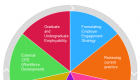 Employer engagement continuum model
 Get STEM working: innovation with employer and student engagement
 The employer perspective on universities' promotion of opportunities to engage with the STEM UG curriculum
 Student-led Employability Audit Toolkit
 Employability Skills of STEM Student Ambassadors
 Quantifying the benefits to collaborating companies of working with groups of students on UG projects
 The Hydrographic Academy: Meeting the needs of the workforce and industry through innovative, flexible, online distance learning
 Community of Practice for Outreach and WP Practitioners
 Transition & Induction Experiences of WP Students
 Developing a new CRM system for managing relationships with SMEs
 Online Numeracy Resource & Nursing
 Enhancing Workplace Statistical Literacy
 Projects without borders: Understanding how employer-led UG projects differ across the STEM disciplines
 Becoming a STEM Enthusiast - Outreach & CPD Video Resources
 The challenges and opportunities of incorporating community-based learning into STEM subjects
 Developing & Enhancing STEM Communicator Models
 Visual Impairment & STEM
 Learning chemistry through placements: building on good practice and identifying new opportunities
 Design a Fireworks Show! - using Context and Problem Based Learning
 Effective Evaluation of STEM Outreach
 Peer Assisted Learning & STEM


© University of Bath 2011-12
HE STEM Programme, University of Bath, Bath, BA2 7AY, UK
Updated by HE STEM web team
Website by Float
