
Lead Institution: University of Exeter
Collaborating with: Graphic Science, Plymouth University, University of Bath, Devon Education Business Partnership
This project addressed two particular priority areas; supporting the demand in schools for STEM activities and improving the employability of undergraduates in STEM subjects.
HEIs across the south west engage with schools and colleges in a range of outreach activities. In this work, Student Ambassadors play a key part as enthusiastic and capable role models; their participation in these programmes means that more students can be reached and ensures that the messages are delivered by people that the pupils can identify with. In turn, Student Ambassadors develop a wide range of skills through their participation in these activities; skills that are highly valued by employers. However, many Ambassadors fail to recognise the transferability of the skills they are developing; fail to recognise that their experiences as an Ambassador can provide them with evidence for the key skills and attributes that employers are looking for.
It was intended that this project would develop a sustainable approach to Ambassador training that would focus explicitly on the skills students acquire through their work in schools and colleges, and help them to articulate these in the context of a graduate job application.
The train the trainers, employability and review session materials were prepared collaboratively by Devon Education Business Partnership (DEBP) and Graphic Science (STEMNET contract holders) and the University of Exeter. In addition, one of the participating HEIs reviewed the proposed materials before they were put to use.
The STEM ambassador induction and employability training was delivered by DEBP and Graphic Science staff supported by STEM Ambassadors and University staff. HEIs, in collaboration with the DEBP, then delivered the “train the trainers” session. Lead students then trained up students in their own institutions to recognise their own skills and to deliver employability workshops for future students, thereby ensuring sustainability of the work. A range of case studies were produced capturing the experiences of students who had received the training and of project officers.
The final report and associated appendices for the project can be downloaded below:
STEM Ambassadors - Final Report
STEM Ambassadors - Final Report Appendices
1. The project led to innovative practice in the partner institutions in the direct involvement of Student Ambassadors in the review, development and delivery of training for other Ambassadors. This brought a new perspective to the development and delivery of training materials and further enhanced the skills and experiences of these lead Ambassadors.
2. The project not only enhanced netowrking opportunities for practitioners who support Ambassador schemes in their institutions but also, brought direct benefit to the Student Ambassadors themselves as evidenced in the evaluations and case studies. This was true both for the students who engaged in the initial workshop sessions and those that became more involved in the train the trainers sessions and in the review and development of materials.
3. The project was founded on a partnership between HEIs and regional STEMNET contract holders. This resulted in an improved understanding of the roles and activities of these complementary stakeholders and opened the way for continued collaboration in the delivery of activities for schools and colleges.

Emma Stephenson
Project lead, University of Exeter
Claire Dimond
Graphic Science

Jayne Stanyer
Plymouth University
Karl Devincenzi
University of Exeter
Liz Simmons
University of Bath
Paul Hartley
Devon Education Business Partnership
Richard Prest
University of Exeter
Rowanna Smith
University of Exeter

 Progressing from labour market intelligence to HE level provision that is well supported by employers
 Get STEM working: innovation with employer and student engagement
 Community of Practice for Outreach and WP Practitioners
 Developing a new CRM system for managing relationships with SMEs
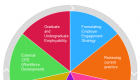 Employer engagement continuum model
 Adult returner journeys through HE to STEM careers
 Visual Impairment & STEM
 Strengthening, extending and embedding employer engagement
 Quantifying the benefits to collaborating companies of working with groups of students on UG projects
 Transition & Induction Experiences of WP Students
 Student-led Employability Audit Toolkit
 The Hydrographic Academy: Meeting the needs of the workforce and industry through innovative, flexible, online distance learning
 Developing & Enhancing STEM Communicator Models
 Online Numeracy Resource & Nursing
 The challenges and opportunities of incorporating community-based learning into STEM subjects
 Employability Skills of STEM Student Ambassadors
 Peer Assisted Learning & STEM
 The employer perspective on universities' promotion of opportunities to engage with the STEM UG curriculum
 Easing the Transition from School Mathematics to University
 Projects without borders: Understanding how employer-led UG projects differ across the STEM disciplines
 Design a Fireworks Show! - using Context and Problem Based Learning
 Developing Writing in STEM Disciplines
 Enhancing Workplace Statistical Literacy
 Becoming a STEM Enthusiast - Outreach & CPD Video Resources
 Technology-enabled employer engagement in analytical chemistry


© University of Bath 2011-12
HE STEM Programme, University of Bath, Bath, BA2 7AY, UK
Updated by HE STEM web team
Website by Float
