
Lead Institution: Plymouth University
Collaborating with: Katalytik, University of Bristol, University of the West of England, The Open University, South Devon College, Devon and Somerset Training Provider Network, STEMNET, University of Bath, Open College Network South West Region, Major Minor Media
The Access to Higher Education (HE) Diploma is a qualification which prepares students for study at university. It is designed for people who would like to study in HE but who left school without the usual qualifications, such as A levels.
Many Access to HE students go on to succeed at university and beyond, with a large number pursuing new careers and seeing changes in their lives that they had never thought possible.
There are over 1,000 different courses leading to the Access to HE Diploma and courses are available in most further education colleges in England and Wales. Access to HE Diplomas are available in a range of different subjects including science, technology and engineering (STEM subjects). Below are some case studies with stories of adults who have progressed onto higher education in STEM subjects via Access to HE Diplomas.
You can find out more about Access to HE Diplomas at the Access to Higher Education website.
The Open College Network SW have a list of Access to HE Diploma courses in the South West region on their website.
Leaving school at 17, Ruth obtained a diploma in patisserie at the Cordon Bleu Cookery School and then worked in several Conran restaurants before realizing that she wanted more from life and didn’t want to dedicate herself (entirely) to cake.
After discussion with her sister, she decided to return to education and researched the options open to her. She took a full time Access course in London and was encouraged to apply to mid range universities. However, she decided to aim for the top and secured an unconditional offer from the University of Bath to study biochemistry. Her year out was based on food science but the experience has convinced her that her future lies elsewhere. While a student, Ruth has been writing science articles for publication. Among her options after graduation she is considering science journalism and media production to bring together her creative and writing skills with science.
You can download this video case study at https://vimeo.com/39474954
David McGoran had a bad experience at school in Canada – he hated it and found that he didn’t seem to be able to learn. He now knows that he is dyslexic. He went into the performing arts and worked for many years as a puppeteer and developed an interest in animatronics. He taught himself basic electronics and was working towards a career in animatronics in film before CGI films wiped out the industry. He found an Access course in London where he was working that offered access to university. The University of the West of England robotics course answered his needs and he eventually found himself staying on to study for a BSc in Robotics and moving into lecturing.
David now works part time as a research associate with the Centre for Fine Print Research, University of the West of England, exploring the potential of combining interactive technology within contemporary 3D fabricating techniques. He is also a senior technical instructor within the Fabrication Centre, at UWE where he manages the TechLab, teaching electronic, digital and kinetic arts. He also founding member of Rusty Squid, a Bristol based collective applying robotic technology within the performing and visual arts.
You can download this video case study at https://vimeo.com/39467556
Joe Pickles did A levels but didn’t get great grades and was rejected from all the universities he applied to. He got onto a university course but it wasn’t what he wanted to do so dropped out after a term and went to work in catering.
During an extended holiday in Greece Joe was inspired, by a large thunderstorm, to consider returning to university to study meteorology. In fact, he ended up studying geology at University of Bristol and embarked on a four year degree in his mid twenties.
He is now finishing his PhD in geochemistry investigating high-pressure environments and is developing tools for the diamond industry. Joe talks about the culture shock of going back into education and extols the virtues of the Access programme which he says is excellent at doing just what it is set up to do: preparing students for entry to higher education.
You can download this video case study at https://vimeo.com/39495604
Louise gave up a successful management role along with a good salary and benefits (private healthcare, free broadband and company car) to go back to being a student.
A star electronics graduate with first class honours from Plymouth University in electronic engineering, she worked for BT Openreach. Long periods away from home, lots of travelling and long days took their toll and she felt she was too far removed from people and the ‘coalface’.
Spurred on by her partner’s career change she took some time out travelling to reflect before taking the plunge herself to fulfill her growing interest in health and nutrition. On her return she undertook some research into health based careers and arranged a day shadowing a dietician at her local hospital. This confirmed her desire to make the shift and change career and return to studying.
Louise ‘s career change was made easier because she had savings to help her fund her student days. But while she was well qualified she didn’t have any biology or chemistry qualifications. An Access to higher education course at South Devon College is helping to guarantee her entry onto the dietetic degree programme.
You can download this video case study at https://vimeo.com/41389485
James went to a number of “good schools” but feels her did not fulfill his potential. He entered sixth form but by then direction and focus had left him, thus dropping out half way through. He says his life was all over the place for a good number of years. He held a variety of jobs from working in bars and restaurants, to sales and building works, before finally getting some help on what to do.
He signed onto an Access course and in a fairly random way chose biology, chemistry and maths. It was the chemistry that sparked the main change for James. He had found something to grasp on to, something that really interested him. He saw that amid the chaos of life there was actually an order to it too and he describes his epiphany being the beauty of the periodic table. On successful completion of his degree course at the University of Bristol, James embarked on a Masters by research (MRes) programme and, although it has just starte,d he is absolutely loving every minute in the lab.
James talks about the help and support on both the Access course and within the university system. He can see his future mapping out working in research.
You can download this video case study at https://vimeo.com/39495606

Prof David Harwood
Project lead, Plymouth University
Jan Peters
Project coordinator, Katalytik
Betsy Bowerman
University of Bristol
Carol Rothwell
Katalytik
Deborah Mcallister
University of the West of England
Dr Ruth Williams
The Open University
Dr Tracey Sweet
South Devon College
Gary Ayles
Devon and Somerset Training Provider Network
Heather Campbell
STEMNET
Julie Kirkby
The Open University
Karen Dickens
Katalytik
Rob Martin
University of Bath
Stephanie Hulford
Open College Network South West Region
Sue Lewis
University of Bath
Tom Staniford
Major Minor Media

 Get STEM working: innovation with employer and student engagement
 Developing a new CRM system for managing relationships with SMEs
 Adult returner journeys through HE to STEM careers
 Community of Practice for Outreach and WP Practitioners
 Online Numeracy Resource & Nursing
 Projects without borders: Understanding how employer-led UG projects differ across the STEM disciplines
 Developing Writing in STEM Disciplines
 The integration of understanding of offerings for engagement between universities and industry
 Progressing from labour market intelligence to HE level provision that is well supported by employers
 Student-led Employability Audit Toolkit
 Transition & Induction Experiences of WP Students
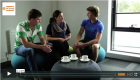 Becoming a STEM Enthusiast - Outreach & CPD Video Resources
 Learning chemistry through placements: building on good practice and identifying new opportunities
 Design a Fireworks Show! - using Context and Problem Based Learning
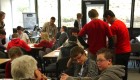 Visual Impairment & STEM
 A partnership for engineering CPD, learning, training and knowledge exchange
 Strengthening, extending and embedding employer engagement
 The Hydrographic Academy: Meeting the needs of the workforce and industry through innovative, flexible, online distance learning
 The employer perspective on universities' promotion of opportunities to engage with the STEM UG curriculum
 Quantifying the benefits to collaborating companies of working with groups of students on UG projects
 Extending the Use of Spectroscopy in a Suitcase
 Employability Skills of STEM Student Ambassadors
 Effective Evaluation of Placement Learning Opportunities
 The challenges and opportunities of incorporating community-based learning into STEM subjects
 Technology-enabled employer engagement in analytical chemistry


© University of Bath 2011-12
HE STEM Programme, University of Bath, Bath, BA2 7AY, UK
Updated by HE STEM web team
Website by Float
