
Lead Institution: Bournemouth University
Collaborating with: University of Exeter, University of the West of England, University of Bristol, University of Bath, Plymouth University
Progress was reported throughout the project. For the complete final report of the project see here.
The project completed an interim report on 30th September 2011 outlining the progress of the six sub-projects (available on their specific project webpages) and project management and overall theme development.
The STEM project RA has begun monthly discussions with the sub project leads. Interim reports have been analysed and from these and the first phone discussions, some interesting themes are beginning to emerge. In terms of the benefits of employer engagement, some common themes are around benefits to employers, for example, understanding better the capabilities of engineering students, and access to resources. Potential barriers to successful employer engagement seemed to be themed around getting the right staff (employers and academics) and students engaged, and timings of work when the curriculum demands do not match the employers’ time scales. Examples of good practice are also emerging, for example the use of technology to facilitate meetings allows considerable savings in time and other expenses, and all the sub projects are recognising that “building good working relationships” with employers is critical.
It is intended to carry out a road show event in March 2012, centralising on Bournemouth University, UWE and Plymouth University in order to attract the full range of employers in the region. The dates will be publicized on the website in due course.
|
SUSTAINABLE THEMES
|
PROJECT IMPACT |
|
Diversity |
One of the sub-projects is investigating alternative technologies which could have a positive impact in some areas of diversity. |
|
Teaching
|
Knowledge gained from the projects will inform practice and enhance curriculum design. |
|
Learning
|
Students will benefit from emerging pedagogies and innovative approaches. |
|
Research
|
The research and evidenced-based approaches will provide confidence in implementing change. |
|
Enterprise
|
The projects are all about improving employer engagement. |
|
Community Engagement
|
One of the projects is directly involved with community engagement and all of the projects will aim for greater involvement of local SMEs. |
|
Corporate Social Responsibility
|
H.E. has a commitment to develop graduates that enrich the world of employment. Students will need to be prepared for the changing demands of the work-place. The projects will provide employers with opportunities to further their corporate social responsibility programmes and provide reputational benefit. |
Using industry bodies has been helpful in establishing links with industry notably within the Bath University (Manufacturing Advisory Service), UWE (Royal Society of Chemistry) projects and Plymouth University (Royal Society of Chemistry). Industry bodies were also noted by employers being interviewed by Bournemouth University as being a key way of making contact.
In terms of the specific aims of the Get STEM working projects, the following key themes can be noted:
1) Innovative Approaches to involving employers in the STEM curriculum: UWE / Bristol University
Innovative opportunities can be established for students to gain experience of the real working world and demonstrate value to both industry and the students. For example at UWE employers indicated that the use of the technologies provided a valuable tool for ascertaining the skill-set of the students and an insight into their scientific and communication skills and to a limited extent their interpersonal skills and students also felt they had a positive learning experience. The positive experiences of students on community projects at Bristol University can be seen at www.creativestem.co.uk
2) Transferability of approaches to employer-led experiential learning
Plymouth University is demonstrating that opportunities can be opened to students studying undergraduate chemistry by looking to non-traditional employers to provide placements. Exeter is investigating how their placement good practice toolkit can be used across various departments.
3) Promoting opportunities for employers to get involved in the STEM undergraduate curriculum and the benefits of doing so more effectively.
Making initial contact with employers can be carried out in various ways from cold-calling, through existing contacts and relationships or through networks or industry bodies. Using existing contacts is the most effective way. Having a hook is vital in the form of “what the HEI can do for the employer” and Bath University has found that having a hook of “a free project” has proved a good door-opener for the Bath University project. This can additionally be tested as part of the next step of the Bournemouth University project, when they interview employers currently not having involvement with HEIs. Having a single point of contact at the HEI has been found to be important. Most of the companies interviewed by Bournemouth University felt that it would be worthwhile for the HEI to visit the company to scope for opportunities. One theme emerging is that the person making contact with the employer should be knowledgeable from an academic point of view but also be able to speak the language of the employer (ideally having industry experience). There is a general lack of awareness between the parties (both employers and HEIs) as to the opportunities available to them. They agreed that it is the HEI that needs to be proactive in beginning this communication process, whilst acknowledging that getting the attention of the person who would be able to make decisions is no mean feat. Bournemouth University will collaborate with Exeter University (Marchmont Observatory) project on employer engagement.

Dr Xavier Velay
Project lead, Bournemouth University

Christine Keenan
Project coordinator, Bournemouth University

Penny Mitchell
Project coordinator, Bournemouth University

Abel Nyamapfene
University of Exeter
David Owen
University of the West of England

Dawn Evans
University of Exeter

Dr Adrian Crew
University of the West of England

Dr Barrie Cooper
University of Exeter

Dr Carolyn Morton
University of the West of England
Dr Maggie Leggett
University of Bristol

Graham Outram
University of Bath
Kate Miller
University of Bristol

Liz Vincent
Plymouth University

Prof Simon Belt
Plymouth University

 Get STEM working: innovation with employer and student engagement
 The challenges and opportunities of incorporating community-based learning into STEM subjects
 Progressing from labour market intelligence to HE level provision that is well supported by employers
 Enhancing Workplace Statistical Literacy
 Projects without borders: Understanding how employer-led UG projects differ across the STEM disciplines
 Strengthening, extending and embedding employer engagement
 Transition & Induction Experiences of WP Students
 The integration of understanding of offerings for engagement between universities and industry
 Student-led Employability Audit Toolkit
 Becoming a STEM Enthusiast - Outreach & CPD Video Resources
 Developing & Enhancing STEM Communicator Models
 Adult returner journeys through HE to STEM careers
 Mechanisms for sustainable employer engagement
 Enhancing STEM Academics' Public Engagement Skills
 Better understanding drivers for employer engagement through an innovative approach to relationship management
 Peer Assisted Learning & STEM
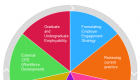 Employer engagement continuum model
 Developing a new CRM system for managing relationships with SMEs
 Online Numeracy Resource & Nursing
 Technology-enabled employer engagement in analytical chemistry
 Extending the Use of Spectroscopy in a Suitcase
 Effective Evaluation of STEM Outreach
 Developing Writing in STEM Disciplines
 The Hydrographic Academy: Meeting the needs of the workforce and industry through innovative, flexible, online distance learning
 Development and implementation of a programme of employability skills for Science undergraduates


© University of Bath 2011-12
HE STEM Programme, University of Bath, Bath, BA2 7AY, UK
Updated by HE STEM web team
Website by Float


