
Lead Institution: Plymouth University
Collaborating with: Bournemouth University
This is a sub-project of Get STEM working: innovation with employer and student engagement
This study report discusses the results of a SW STEM initiated project, which has focussed on identifying new work-based learning opportunities for chemistry students. Firstly, we have investigated whether employers, who traditionally host sandwich or long-term placements, are able to offer short-term (e.g. summer) placements as an alternative work-based learning experience. Secondly, we have determined to what extent non-traditional employers of chemistry graduates are able to offer relevant and appropriate placement opportunities for chemistry students.
Of the 182 companies contacted, 29 (16%) provided feedback on their perceptions, understanding, expectations and limitations of short-term placements. The feedback revealed that the overall perception of short-term placements is positive (17 out of 29; 59%) and that all but 2 (7%) companies had previous experience of hosting students, in a variety of work-based learning opportunities. 18 (62%) companies considered the summer period (3 months) to be sufficient time for both employers and students to benefit from the experience. These benefits were perceived as providing recruitment opportunities (10; 34%) or extra resource (10; 34%) for employers; while offering a real-life and/or science-related work experience for students (12; 41% and 8; 28%, respectively). In general, our findings are consistent with those obtained previously from research into longer-term placements (Lemanski 2011; Little 2006). 15 (52%) companies stated that they could only offer unpaid placements, while other limitations included external influences (7; 24%), subject (5; 17%) or workload (5; 17%); although the lack of suitable projects was also a cause for concern.
Overall, 32 companies indicated that they were interested in hosting short-term placements, of which 23 (72%) were traditional chemistry graduate employers and 9 (28%) were non‑traditional employers, from the engineering and other (manufacturing, finance, retail, IT, etc) industries; indicating that placement opportunities for chemistry students in non-traditional chemistry employers exist.
These findings have been collated and analysed to develop an employer-centred approach to help companies overcome perceived and potential barriers to offering short-term placements and to inform good practice and develop successful placement opportunities, going forward
Project contact summary reports

Prof Simon Belt
Project lead, Plymouth University

Liz Vincent
Project coordinator, Plymouth University

Christine Keenan
Bournemouth University

Penny Mitchell
Bournemouth University

 Progressing from labour market intelligence to HE level provision that is well supported by employers
 Get STEM working: innovation with employer and student engagement
 The employer perspective on universities' promotion of opportunities to engage with the STEM UG curriculum
 Strengthening, extending and embedding employer engagement
 Community of Practice for Outreach and WP Practitioners
 Design a Fireworks Show! - using Context and Problem Based Learning
 Adult returner journeys through HE to STEM careers
 Development and implementation of a programme of employability skills for Science undergraduates
 Visual Impairment & STEM
 Peer Assisted Learning & STEM
 Student-led Employability Audit Toolkit
 Effective Evaluation of STEM Outreach
 Developing a new CRM system for managing relationships with SMEs
 Extending the Use of Spectroscopy in a Suitcase
 Quantifying the benefits to collaborating companies of working with groups of students on UG projects
 Learning chemistry through placements: building on good practice and identifying new opportunities
 Developing Writing in STEM Disciplines
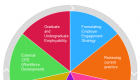 Employer engagement continuum model
 Promoting employer engagement opportunities to employers
 A study of the key drivers in workforce engagement with HE level provision in the Aerospace sector
 Becoming a STEM Enthusiast - Outreach & CPD Video Resources
 The Hydrographic Academy: Meeting the needs of the workforce and industry through innovative, flexible, online distance learning
 The challenges and opportunities of incorporating community-based learning into STEM subjects
 Online Numeracy Resource & Nursing
 Employability Skills of STEM Student Ambassadors


© University of Bath 2011-12
HE STEM Programme, University of Bath, Bath, BA2 7AY, UK
Updated by HE STEM web team
Website by Float
