
Lead Institution: University of the West of England
Collaborating with: Bournemouth University
This is a sub-project of Get STEM working: innovation with employer and student engagement
Employability is a key strategy of the university and this project addresses this issue. The Department of Applied Sciences at UWE has indicated that it will support the provision of staff time to enable the continuation of the engagement in 2012-2013. The employer contacts will be sustained to enable this.
The format of the presentations and assessment task will remain essentially the same in future years. The main modification to the engagement will be to make the presentations part of the students’ Graduate Development Programme (GDP) rather than integrated into the IAS course. This will link the presentations directly with discussion of future employability and will remove their perception of the assessment as an extra assessment on the IAS course.
The project will be extended to include other areas of science, in particular DNA analysis, which would then provide links between employers and students taking genetics modules at level 2. Incorporating the exercise in GDP removes timetabling constraints linked to a specific module and will allow more flexibility to timetable presentations at the most appropriate time for both students and employers. This would also enable resources to be prepared that could be easily adopted by other staff at UWE as part of the Graduate Development Programme in other subject areas (e.g. Environmental Science, Engineering and Maths).
The Department of Applied Sciences at UWE has indicated that it is supportive of this extremely beneficial activity and intends to allocate a modest resource each year to enabling it to continue and develop. This will help contribute to the future employability of the undergraduates and provide significant benefits to students and the university. These changes and developments will ensure that the activity can be sustained, especially as relationships with employers are developed further.
For more information please contact the project lead:

Dr Carolyn Morton
Project lead, University of the West of England

Dr Adrian Crew
Project coordinator, University of the West of England

Christine Keenan
Bournemouth University

Penny Mitchell
Bournemouth University

 Get STEM working: innovation with employer and student engagement
 Student-led Employability Audit Toolkit
 Transition & Induction Experiences of WP Students
 Easing the Transition from School Mathematics to University
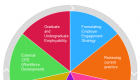 Employer engagement continuum model
 Employability Skills of STEM Student Ambassadors
 Projects without borders: Understanding how employer-led UG projects differ across the STEM disciplines
 Progressing from labour market intelligence to HE level provision that is well supported by employers
 Community of Practice for Outreach and WP Practitioners
 Adult returner journeys through HE to STEM careers
 The integration of understanding of offerings for engagement between universities and industry
 Developing a new CRM system for managing relationships with SMEs
 Strengthening, extending and embedding employer engagement
 Technology-enabled employer engagement in analytical chemistry
 Developing & Enhancing STEM Communicator Models
 Enhancing Workplace Statistical Literacy
 The Hydrographic Academy: Meeting the needs of the workforce and industry through innovative, flexible, online distance learning
 Extending the Use of Spectroscopy in a Suitcase
 Enhancing STEM Academics' Public Engagement Skills
 Quantifying the benefits to collaborating companies of working with groups of students on UG projects
 The challenges and opportunities of incorporating community-based learning into STEM subjects
 Visual Impairment & STEM
 Design a Fireworks Show! - using Context and Problem Based Learning
 Learning chemistry through placements: building on good practice and identifying new opportunities
 Becoming a STEM Enthusiast - Outreach & CPD Video Resources


© University of Bath 2011-12
HE STEM Programme, University of Bath, Bath, BA2 7AY, UK
Updated by HE STEM web team
Website by Float
