
Lead Institution: University of the West of England
Collaborating with: Bournemouth University
This is a sub-project of Get STEM working: innovation with employer and student engagement
This project was designed to determine the most appropriate system that would enable employer engagement with analytical science students via the use of technology and to integrate the use of the technology into the curriculum of the undergraduate Forensic Science course. From the communication technologies available, two were selected representing the best available meeting/conferencing technologies; videoconferencing (VCON) and the online FlashMeeting (FM).
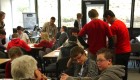
Volunteer students from the UWE Instrumental Analytical Science (IAS) module presented a 10 minute presentation based on a practical analytical technique learned in the course, followed by a 10 minute feedback from the employers. The presentations were recorded and all students on the IAS course were required to complete a 400-word assessment based on the employers’ feedback. The acceptability of this protocol was evaluated from the responses from the three different groups; presenting students, non-presenting students and employers.
VCON and FM were both found to be fit-for-purpose and acceptable to both students and employers. The two systems had complementary strengths; VCON was an excellent quality and stable system with limited uptake in industry because of initial setup costs, whereas FM is free and does not incur setup costs but is susceptible to connection problems and a lack of audio and video quality. Both systems are acceptable to employers, although VCON was the technology of choice. FM may become more viable with improved internet speed and connection stability, and from the improvement of mobile technology.
The presenting students and employers viewed the engagement as constructive and a valuable experience. The standard of the presentations and the encouragement to the student from the employers were highly appreciated. The quality of communication was vital to the positive experience of both these groups. The non-presenting students were rather negative about the assessment, but the reasons for this are clearly defined and discussed. In subsequent years it will be eminently possible to address all of these concerns based on the learning experiences of this initial year.
A measure of the success of the engagement has been the willingness of the employers to participate in future years and the commitment of UWE to continue the employer engagement with limited modifications for the IAS students and potentially other forensic science courses involving analytical techniques.

Dr Carolyn Morton
Project lead, University of the West of England

Dr Adrian Crew
Project coordinator, University of the West of England

Christine Keenan
Bournemouth University

Penny Mitchell
Bournemouth University

 Developing & Enhancing STEM Communicator Models
 Student-led Employability Audit Toolkit
 The challenges and opportunities of incorporating community-based learning into STEM subjects
 Get STEM working: innovation with employer and student engagement
 Transition & Induction Experiences of WP Students
 Progressing from labour market intelligence to HE level provision that is well supported by employers
 Community of Practice for Outreach and WP Practitioners
 Adult returner journeys through HE to STEM careers
 Quantifying the benefits to collaborating companies of working with groups of students on UG projects
 Access Grid Nodes for remote training provision for work-based learners
 The Hydrographic Academy: Meeting the needs of the workforce and industry through innovative, flexible, online distance learning
 Employability Skills of STEM Student Ambassadors
 Peer Assisted Learning & STEM
 Becoming a STEM Enthusiast - Outreach & CPD Video Resources
 Learning chemistry through placements: building on good practice and identifying new opportunities
 Strengthening, extending and embedding employer engagement
 Developing Writing in STEM Disciplines
 Employer engagement continuum model
 Visual Impairment & STEM
 Design a Fireworks Show! - using Context and Problem Based Learning
 Better understanding drivers for employer engagement through an innovative approach to relationship management
 HiSPARC - Doing Real Particle Physics Research in Schools
 Enhancing Workplace Statistical Literacy
 A partnership for engineering CPD, learning, training and knowledge exchange
 The integration of understanding of offerings for engagement between universities and industry


© University of Bath 2011-12
HE STEM Programme, University of Bath, Bath, BA2 7AY, UK
Updated by HE STEM web team
Website by Float
