
Lead Institution: Wiltshire College
An Access Grid Node (AGN) has been installed at one of Wiltshire College’s campuses to facilitate use of high level videoconferencing for STEM employers in Wiltshire. The objective was to support employers with access to staff development spanning FE and HE (working in collaboration with the University of Bath). Extensive infrastructural work was required, including increase in bandwidth and room refurbishment. The former, particularly, required considerable time to complete.
Subsequent to commencement of the project, decisions were made to further improve the room housing the AGN and to refurbish surrounding accommodation to provide a high quality STEM Centre. Whilst this has improved the likelihood of engagement with employers, the implementation involved an unexpectedly extended period of unavailability of the service.
Multiple rounds of surveying STEM employers have been undertaken. Interest from employers has been lower than anticipated and is thought to reflect the economic environment and short term priorities of the employers. There have also been effects of government policy changes with respect to public sector STEM employers. Much effort has gone into preparing the ground for further engagement with employers after the project formally ends. This includes the refurbishment noted above, development of a formal Wiltshire College STEM Strategy, increased internal co-ordination on STEM, planning for a STEM Fair, contact with STEM Ambassadors, and refinements to the STEM employer database. There has been considerable learning with regard to the identification of relevant employers, for which there have been improvements during the project, but more analysis and planning is required.
Guidelines and training for use of this high level of videoconferencing have been disseminated internally. The college is now moving from the original AGN software to use of VisimeetTM which is evidently more flexible and likely to be more appealing to employers. A further, smaller scale and portable node is being completed for another Wiltshire College campus. This is being built by the college’s own staff based on their experience with the AGN and will use VisimeetTM. This is thought to add considerably to the appeal for employers and to more surely evidence sustainability benefits.
It is considered that continued efforts alongside improved economic conditions will see the project make a significant impact, albeit outside of the formal timescale.

Mark Thompson
Wiltshire College

 Enhancing Workplace Statistical Literacy
 Get STEM working: innovation with employer and student engagement
 Student-led Employability Audit Toolkit
 Becoming a STEM Enthusiast - Outreach & CPD Video Resources
 Learning chemistry through placements: building on good practice and identifying new opportunities
 Progressing from labour market intelligence to HE level provision that is well supported by employers
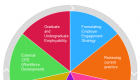 Employer engagement continuum model
 Visual Impairment & STEM
 Community of Practice for Outreach and WP Practitioners
 Strengthening, extending and embedding employer engagement
 Adult returner journeys through HE to STEM careers
 Developing & Enhancing STEM Communicator Models
 Transition & Induction Experiences of WP Students
 Better understanding drivers for employer engagement through an innovative approach to relationship management
 Employability Skills of STEM Student Ambassadors
 The challenges and opportunities of incorporating community-based learning into STEM subjects
 Promoting employer engagement opportunities to employers
 Technology-enabled employer engagement in analytical chemistry
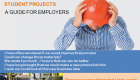 Quantifying the benefits to collaborating companies of working with groups of students on UG projects
 The employer perspective on universities' promotion of opportunities to engage with the STEM UG curriculum
 Developing Writing in STEM Disciplines
 The integration of understanding of offerings for engagement between universities and industry
 Easing the Transition from School Mathematics to University
 Extending the Use of Spectroscopy in a Suitcase
 Online Numeracy Resource & Nursing


© University of Bath 2011-12
HE STEM Programme, University of Bath, Bath, BA2 7AY, UK
Updated by HE STEM web team
Website by Float
