
Lead Institution: Bournemouth University
Collaborating with: STEMNET, University of Bath, University of the West of England
A significant strand of the Peer Assisted Learning: In and beyond the classroom project focused upon online PAL (or ePAL). Activity included a review of relevant literature and the trialing of online PAL activity at the University of the West of England (UWE). This pilot engaged 4 online PAL leaders and 20 year 1 STEM students.
A research report and a bibliography capturing the findings of the pilot and literature review were produced, and can be downloaded at the bottom of this page.
The research took a critical look at how online integrative technology can be used to facilitate developmental relationships within a Peer Assisted Learning (PAL) setting. The chosen collaborative software was Microsoft Lync (MS Lync) and was used to support online PAL at UWE. MS Lync was the preferred platform as it is supported well within the university but more importantly, fulfils the principles of confidentiality, anonymity and ‘safety to make mistakes’ which underpin the success of PAL.
The data for the study was collected over a 16-week period from a range of sources to ensure high quality and in-depth information capture. The research report includes findings from:
The research methodology illicited a range of findings with regards online PAL, and these helped to construct the following advantages and disadvantages of online PAL:
Advantages of online PAL:
Disadvantages of online PAL:

Christine Keenan
Project lead, Bournemouth University

Penny Mitchell
Project coordinator, Bournemouth University

Heather Campbell
STEMNET

Iryna Withington
University of Bath
Lisa Benjamin
University of Bath

Makis Malliris
University of the West of England

 Progressing from labour market intelligence to HE level provision that is well supported by employers
 Student-led Employability Audit Toolkit
 Get STEM working: innovation with employer and student engagement
 Enhancing Workplace Statistical Literacy
 Developing a new CRM system for managing relationships with SMEs
 Mechanisms for sustainable employer engagement
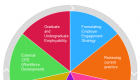 Employer engagement continuum model
 Peer Assisted Learning & STEM
 Strengthening, extending and embedding employer engagement
 Easing the Transition from School Mathematics to University
 South West HE STEM Workforce Development & Employability Conference
 The Hydrographic Academy: Meeting the needs of the workforce and industry through innovative, flexible, online distance learning
 Adult returner journeys through HE to STEM careers
 Transition & Induction Experiences of WP Students
 A partnership for engineering CPD, learning, training and knowledge exchange
 Technology-enabled employer engagement in analytical chemistry
 Employability Skills of STEM Student Ambassadors
 Effective Evaluation of Placement Learning Opportunities
 The integration of understanding of offerings for engagement between universities and industry
 Enhancing STEM Academics' Public Engagement Skills
 Projects without borders: Understanding how employer-led UG projects differ across the STEM disciplines
 Developing Writing in STEM Disciplines
 The challenges and opportunities of incorporating community-based learning into STEM subjects
 Access Grid Nodes for remote training provision for work-based learners
 Learning chemistry through placements: building on good practice and identifying new opportunities


© University of Bath 2011-12
HE STEM Programme, University of Bath, Bath, BA2 7AY, UK
Updated by HE STEM web team
Website by Float
