
Lead Institution: Plymouth University
This is a sub-project of Progressing from labour market intelligence to HE level provision that is well supported by employers
Higher Education Institutions [HEIs]/Further Education Colleges [FECs] are increasingly seeking links or partnerships with employers. This work is often driven forward by a wide range of staff, from module leaders to senior managers, for very specific reasons e.g. the pursuit of research or Work Based Learning [WBL] opportunities for students. However, these staff may not always be aware of the full range of employer engagement [EE] activities across their institution. Also their efforts may not be clearly linked to institutional motivations and strategies around employer engagement. This guide aims to provide a concise summary of the type of institutional level motivations that should help any staff member in forging relationships with employers.
The value of employer engagement to universities and colleges and its operation
While there may be significant potential for Higher Education Institutions [HEIs]/Further Education Colleges [FECs] to provide products and service of great value to employers, HEI/FECs are infrequently considered when organisations are looking for partners in developing their business. Where businesses and other organisations do look to establish relationships with educational bodies, it is more likely that a FEC rather than HEI will be the first point of contact. This is due to such factors as FECs having students across a wider range of subjects, age groups and engaging in more work based learning. Where organisations do work with HEI/FECs these are commonly serial collaborators and have established working practice and procedures. What follows may assist HEI/FECs to explore their institutional strategy for approaching employers.
The value for employer of HEI/FEC engagement
The aim of this tool / guide is to assist staff from Higher Education Institutions [HEIs]/Further Education Colleges [FECs] undertaking employer engagement work to understand and act on risk analysis. Most large organisations maintain risk registers and use protocols to assess and manage risk. The objective here is not to replicate the detail of these systems but to focus on the initial, exploratory and developmental phases of employer engagement. This is work that is frequently undertaken face-to-face, at an employer’s premises and where the member of HEI/FEC staff is the sole representative of their organisation. Therefore what follows is intended to highlight many known potential risks of Employer Engagement work and assist practitioners, and those that manage them, in avoiding major risks and assisting in long term risk management by their organisations.
Introduction to risk analysis in relation to employer engagement

Mark Stone
Project lead, Plymouth University

 Effective Evaluation of STEM Outreach
 Employability Skills of STEM Student Ambassadors
 Get STEM working: innovation with employer and student engagement
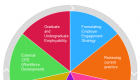 Employer engagement continuum model
 Developing a new CRM system for managing relationships with SMEs
 Quantifying the benefits to collaborating companies of working with groups of students on UG projects
 Enhancing Workplace Statistical Literacy
 The integration of understanding of offerings for engagement between universities and industry
 Student-led Employability Audit Toolkit
 Strengthening, extending and embedding employer engagement
 Becoming a STEM Enthusiast - Outreach & CPD Video Resources
 Progressing from labour market intelligence to HE level provision that is well supported by employers
 Adult returner journeys through HE to STEM careers
 Online Numeracy Resource & Nursing
 Developing Writing in STEM Disciplines
 Developing & Enhancing STEM Communicator Models
 Transition & Induction Experiences of WP Students
 Visual Impairment & STEM
 The Hydrographic Academy: Meeting the needs of the workforce and industry through innovative, flexible, online distance learning
 The challenges and opportunities of incorporating community-based learning into STEM subjects
 A partnership for engineering CPD, learning, training and knowledge exchange
 Projects without borders: Understanding how employer-led UG projects differ across the STEM disciplines
 Learning chemistry through placements: building on good practice and identifying new opportunities
 HiSPARC - Doing Real Particle Physics Research in Schools
 Community of Practice for Outreach and WP Practitioners


© University of Bath 2011-12
HE STEM Programme, University of Bath, Bath, BA2 7AY, UK
Updated by HE STEM web team
Website by Float
