
Lead Institution: Plymouth University
This is a sub-project of Progressing from labour market intelligence to HE level provision that is well supported by employers
The following guides are aimed at staff working in universities and/or colleges who engage employers as part of their role and wish to become better informed about the specific areas outlined below. They are likely to be particularly useful to HE staff who are new to this area of work. In addition, these guides may be used by university and college staff to provide employers with an overview of these aspects of the HE curriculum.
Successful Employer Engagement requires that staff from Higher Education Institutions [HEIs]/Further Education Colleges [FECs] and employers are able to span the boundary between two related but sometimes apparently highly differentiated domains. Every profession or field of work helps to define itself in terms of the territory it occupies and those that form part of their tribe. A key way this manifests itself is in the context specific language that evolves and is used by different groups.
This guide aims to provide a useful list of academic terminology for use in partnership working.
A Glossary of Academic Terminology Related to Employer Engagement
A key aim of Higher Level Apprenticeships is to place practical learning on a level footing with academic study at Higher Education [HE] level [level 4 and above]. This is not only to provide greater equality of opportunity with traditional HE study routes but also targets redressing skills gaps in the national economy. There are still relatively few in place [15 frameworks at levels 4 and above in England at June 2012]. Higher Level Apprentices gain the opportunity to acquire HE qualifications and further their careers to professional status at level 6 and beyond.
This guide provides an overview of Apprenticeships and Higher Level Apprenticeships and raises some issues still to be resolved in relation to HLAs.
Introduction to Higher Level Apprenticeships
The aim of this guide is to categorise and provide working definitions of the major types of Work Based Learning [WBL] and the terminology used to aid communication between all stakeholders in WBL in Higher Education [HE]. WBL can be confusing as a number of terms are commonly used interchangeably. What follows is derived from a Guide to Work Based Learning at Plymouth University, 2012, produced by Professor Stephen Gomez.
Introduction to Workbased Learning
The distinctiveness of Foundation degrees [FDs] depends upon the integration of the following characteristics: employer involvement; accessibility; articulation and progression; flexibility; and partnership. While none of these attributes is unique to FDs, their clear and planned integration within a single award, underpinned by work-based learning, makes the award very distinctive. This guide provides an overview of Foundation degrees including the key aspects of employer engagements within this qualification.
Introduction to Foundation Degrees
APL (Accreditation of Prior Learning) is a process that aims to recognise prior learning so that it might contribute to a current or future course of study. Recognition takes the form of assessing the amount and level of learning regardless of where it took place, for example at work, in the home or undertaking voluntary work. The premise is that learning can be identified, measured, assessed and accredited, regardless of the context in which it is acquired. This has the potential to save time and money and avoids the need for repetition of learning that has already been acquired.
This guide gives an overview of APL.
Introduction to Accreditation of Prior Learning (for employers)
Introduction to Accreditation of Prior Learning (for learners)

Mark Stone
Project lead, Plymouth University

 Progressing from labour market intelligence to HE level provision that is well supported by employers
 Visual Impairment & STEM
 Get STEM working: innovation with employer and student engagement
 The Hydrographic Academy: Meeting the needs of the workforce and industry through innovative, flexible, online distance learning
 Effective Evaluation of STEM Outreach
 Learning chemistry through placements: building on good practice and identifying new opportunities
 Student-led Employability Audit Toolkit
 Technology-enabled employer engagement in analytical chemistry
 South West HE STEM Workforce Development & Employability Conference
 Peer Assisted Learning & STEM
 Better understanding drivers for employer engagement through an innovative approach to relationship management
 Adult returner journeys through HE to STEM careers
 Projects without borders: Understanding how employer-led UG projects differ across the STEM disciplines
 Online Numeracy Resource & Nursing
 Strengthening, extending and embedding employer engagement
 Design a Fireworks Show! - using Context and Problem Based Learning
 Becoming a STEM Enthusiast - Outreach & CPD Video Resources
 Community of Practice for Outreach and WP Practitioners
 Quantifying the benefits to collaborating companies of working with groups of students on UG projects
 The challenges and opportunities of incorporating community-based learning into STEM subjects
 The employer perspective on universities' promotion of opportunities to engage with the STEM UG curriculum
 Employability Skills of STEM Student Ambassadors
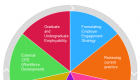 Employer engagement continuum model
 Enhancing Workplace Statistical Literacy
 Extending the Use of Spectroscopy in a Suitcase


© University of Bath 2011-12
HE STEM Programme, University of Bath, Bath, BA2 7AY, UK
Updated by HE STEM web team
Website by Float
