
Lead Institution: Bournemouth University
Collaborating with: STEMNET, University of Bath, University of the West of England
The drive for this project was a statement made by the National Audit Office (2007) that as a group, students studying STEM disciplines are less likely to progress to the next year of study than other students. This claim underpinned the work of the project which aimed to explore and enhance the transition and induction experiences of students starting on STEM programmes in the SW region in order to inform and encourage the development of more inclusive transition and induction programmes.
The project set out to explore existing practice in the SW region and through a series of seminars offering opportunities for sharing experience and knowledge. The seminar keynotes and other invited speakers provided an opportunity to learn from research and practice, and also offered an opportunity to gain tailored information and guidance in specialist areas such as Aspergers Syndrome and Equality legislation. In particular, work around establishing Maths Cafes as a model of support arose from these seminars. The accompanying briefing documents to the seminars provided an opportunity to learn about other initiatives taking place in the wider HE sector - for example, the experience of transition to HE for Care Leavers, and peer mentoring for students with a disability.
A further aim of the project was to learn from Meet the Scientist Ambassadors and STEM Ambassadors who have worked closely with young people in the school environment, in order to learn from their insights into the expectations and barriers that young people may experience with regards transition to HE - this resulted in the Do Scientists Really Exist? case study. In addition, voices of project participants interested in student transition were captured in a creative learning journey.
Finally, the findings from the seminars and the ambassador study led to the development of good practice guidelines with a particular focus on social and academic integration to enhance transition and induction experiences of new students on HE STEM programmes in the SW region.
The final report for the project can be downloaded below:
1. The regional seminars were a key highlight. The seminars were well attended, lively and informative. Keynote speakers were enthusiastic about the project and, together with the practitioner speakers, they inspired those who attended to think about and seek to change their practices and approaches for the better.
2. The STEM ambassador case study (Do Scientists Really Exist?) provided an unusual angle to understand the feelings, expectations and possible barriers felt by young people about science. Through their work with young people, ambassadors held particular insights and were able to draw on their lived experiences.
3. The contribution of the project working group was a significant highlight and provided a breadth of experience and expertise to draw upon.

Christine Keenan
Project lead, Bournemouth University

Penny Mitchell
Project coordinator, Bournemouth University

Heather Campbell
STEMNET

Iryna Withington
University of Bath
Lisa Benjamin
University of Bath

Makis Malliris
University of the West of England

 Get STEM working: innovation with employer and student engagement
 Progressing from labour market intelligence to HE level provision that is well supported by employers
 HiSPARC - Doing Real Particle Physics Research in Schools
 Design a Fireworks Show! - using Context and Problem Based Learning
 Strengthening, extending and embedding employer engagement
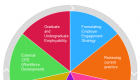 Employer engagement continuum model
 Community of Practice for Outreach and WP Practitioners
 Student-led Employability Audit Toolkit
 Enhancing STEM Academics' Public Engagement Skills
 Adult returner journeys through HE to STEM careers
 Transition & Induction Experiences of WP Students
 Learning chemistry through placements: building on good practice and identifying new opportunities
 Developing Writing in STEM Disciplines
 Better understanding drivers for employer engagement through an innovative approach to relationship management
 Peer Assisted Learning & STEM
 Developing a new CRM system for managing relationships with SMEs
 The integration of understanding of offerings for engagement between universities and industry
 Enhancing Workplace Statistical Literacy
 Projects without borders: Understanding how employer-led UG projects differ across the STEM disciplines
 Developing & Enhancing STEM Communicator Models
 Employability Skills of STEM Student Ambassadors
 Promoting employer engagement opportunities to employers
 The Hydrographic Academy: Meeting the needs of the workforce and industry through innovative, flexible, online distance learning
 Becoming a STEM Enthusiast - Outreach & CPD Video Resources
 The challenges and opportunities of incorporating community-based learning into STEM subjects


© University of Bath 2011-12
HE STEM Programme, University of Bath, Bath, BA2 7AY, UK
Updated by HE STEM web team
Website by Float
