
Lead Institution: University of Exeter
Collaborating with: Bournemouth University
This is a sub-project of Get STEM working: innovation with employer and student engagement
Progress was reported throughout the project. For the complete final report of the project see here.
Since the provisional findings reported in November 2011, this project - regarding industry-based student projects in the College of Engineering, Maths and Physical Sciences here at Exeter - has gained momentum. The collection and analysis of relevant information, opinions and literature to inform our review of current practice is now nearing completion.
Below is the report detailing these advances and how we plan to move on from there. It can also be viewed in its original format as a shared file for those who have access to the private pages for this project. The report was prepared for the South West External Advisory Group (SWEAG).
Significant progress has been made on the milestone “Report on how different disciplines within science can best present and manage employer-led projects”. The first stage to achieving this milestone was to survey fourth year engineering students who had undertaken a third year project with an element of industrial involvement. The results and analysis for this are available on the project web page on the HE STEM collaboration tool.
70 questionnaires were distributed; of these, 35 were returned, but 25 contained little more information than names and course details – most of these students stated that they did not have a named industrial partner for their project. Of the remaining 10, 2 were returned with a relevant industrial link mentioned, but were only partially completed. 8 questionnaires with a relevant industrial link and that were fully completed were returned.
As this was a fairly small sample of data for analysis, we decided to increase the depth of our knowledge through narrative interviews with the 8 students who returned completed questionnaires, as mentioned in the interim report. These interviews are now underway, with two already having taken place and two more confirmed in the upcoming weeks. The information from these interviews will be studied and included as part of our review.
Interviews with staff to obtain their perceptions on employer-led projects have continued, with the interviews of engineering projects supervisors now concluded. We have so far interviewed 4 project supervisors out of the 7 that we have approached. These supervisors were specifically chosen either because we are aware that they have a strong link with industry or that they were involved in multiple projects with a high rating regarding the level of industrial involvement (4* and above).
Both the staff and student interviews have given a snapshot of some of the employer engagement that goes on in engineering at Exeter – 14 specific organisations were mentioned by the project supervisors and students as being engaged with the university in relation to student projects. Our project has also impacted widely on those not in the College – we have engaged 32 individuals so far from a range of institutions and departments within the university.
Other events have also impacted on this project: Dawn Evans (project assistant) has participated in meetings with other academic staff within the college (this time not exclusively in engineering) relating to another HE STEM project: “Integration of understanding of offerings for engagement between HEIs and industry”. Though they were not engaged specifically for this higher education curricula project, three of these members of staff expressed interest and support for the project and supplied valuable information about their own experiences and industrial links.
The literature review is progressing well and an abstract for the HEA STEM conference has been prepared to contribute to the process of dissemination. The progress of the later milestones remain the same as recorded in the interim report, as most of our further work will centre on the current review process.
The narrative interviews with Engineering students mentioned in the last update report have now concluded, with three students contributing. We have also held an interdisciplinary forum-style meeting in February, inviting staff currently involved – or looking to begin involvement – in industrial student projects to attend. The attendees included two members of the project team, three senior engineering academics with experience in dealing with student projects, the assistant director for education for mathematics, a senior physics lecturer, a computer science lecturer and ITMB programme director and another engineering lecturer.
The main aims of the meeting were to discuss approaches to engaging industry in student projects, with the experienced staff members sharing ideas with those staff new to it. We also discovered through our interviews with staff and students that intellectual property and other legal issues were a concern for many and often a barrier to otherwise potentially successful engagements. For this reason, we discussed particular concerns at the forum meeting, noted these down and relayed them to a member of the legal team. Practical solutions and processes are in the process of being compiled by the legal team into a briefing document, and once returned to us, will be distributed to staff in the College.
Another output from this forum meeting is that many staff members discovered from an academic at the meeting that they are able to request IP lectures to their students from Research and Knowledge Transfer (RKT). The project team contacted RKT, obtained specific contact details, information on the eligibility of students and the timescale that would be involved from requesting a lecture to it being carried out, then distributed this information to all interested staff members.
It was discovered that Computer Science student industrial projects suffer particularly from issues relating to IP, due to the likelihood of the project requiring the creation of software. Engineering and Physics student projects described problems relating to the ownership of “ideas”. Both of the outputs associated with this meeting aim to clarify procedures to avoid these issues and resolve them where necessary.
The report on the impact of multi-disciplinary projects has been difficult to achieve due to the lack of industrial-based projects taking place outside of Engineering in the Autumn term, and the lack of projects featuring collaboration between the different disciplines. Timetabling has been mentioned as a particular barrier to such activities, as STEM subjects tend to have high contact hours. However, we have looked at projects in the different areas within Engineering – mechanical, electronic, civil etc – and have found that students enjoy their projects more when they feel they have support from a supervisor who is knowledgeable in the particular area of their project. Therefore, whilst multidisciplinary projects do have their advantages (wider range of options available, the chance to do something different), the student must have direct support from an interested member of staff (whether from the university or industry) to reach their full potential in the project.
Direct comparisons between individual and group projects cannot be made, as those students interviewed were providing a reflective account of their individual project, but their group projects were still in progress at the time of the interviews. The same can be said for comparisons between these projects and summer placements – those students who did comment were providing a reflective account of their experiences. However, a common theme was that the fourth year group project was more enjoyable, with reasons such as increased confidence and greater knowledge and sense of project direction cited.
A checklist for the most common barriers to project success that we have found from the review stage of our project, the QAA employer engagement checklist, the Lambert interactive toolkit (focused on intellectual property) and the guidelines from the legal team, is currently being produced – it will also contain advice and resources available to mitigate these difficulties. This checklist will form the basis of a new 1-10 rating system for the effectiveness of an industrial student project, allowing for efficient (the supervisors will only have to perform one check), evidence-based ratings to replace the broadly interpretable 1-5 system currently in place. A desirable project would have a rating of 8 or above.
We have been invited to submit papers to the HEA Annual STEM Conference and the EE2012 Conference about specific areas of our project – we shall use these as dissemination and evaluation opportunities, inviting delegates to interact with our presentation and provide feedback.

Dr Barrie Cooper
Project lead, University of Exeter

Abel Nyamapfene
Project coordinator, University of Exeter
Chloe Cunningham
University of Exeter

Christine Keenan
Bournemouth University

Dawn Evans
University of Exeter

Penny Mitchell
Bournemouth University

 Enhancing Workplace Statistical Literacy
 Get STEM working: innovation with employer and student engagement
 Online Numeracy Resource & Nursing
 Employability Skills of STEM Student Ambassadors
 Strengthening, extending and embedding employer engagement
 South West HE STEM Workforce Development & Employability Conference
 HiSPARC - Doing Real Particle Physics Research in Schools
 Progressing from labour market intelligence to HE level provision that is well supported by employers
 The integration of understanding of offerings for engagement between universities and industry
 Adult returner journeys through HE to STEM careers
 Quantifying the benefits to collaborating companies of working with groups of students on UG projects
 Community of Practice for Outreach and WP Practitioners
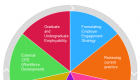 Employer engagement continuum model
 The challenges and opportunities of incorporating community-based learning into STEM subjects
 Design a Fireworks Show! - using Context and Problem Based Learning
 Peer Assisted Learning & STEM
 Visual Impairment & STEM
 Mechanisms for sustainable employer engagement
 A partnership for engineering CPD, learning, training and knowledge exchange
 Projects without borders: Understanding how employer-led UG projects differ across the STEM disciplines
 Student-led Employability Audit Toolkit
 Becoming a STEM Enthusiast - Outreach & CPD Video Resources
 Developing Writing in STEM Disciplines
 Access Grid Nodes for remote training provision for work-based learners
 Transition & Induction Experiences of WP Students


© University of Bath 2011-12
HE STEM Programme, University of Bath, Bath, BA2 7AY, UK
Updated by HE STEM web team
Website by Float
