
Lead Institution: University of Exeter
Collaborating with: Bournemouth University
This is a sub-project of Get STEM working: innovation with employer and student engagement
Many undergraduate projects within the College of Engineering, Mathematics and Physical Sciences contain an element of industry collaboration, ranging from a company expressing an interest in the results of a student’s research, through to companies fully sponsoring a student to research a specific area, including visits to the industrial partner’s premises. A review of current practice took place to identify key issues and examples of good practice.
Engineering in particular has excellent industry-linked opportunities for students and the added benefit of penultimate year students undertaking an individual research project, which may be employer-led. This meant that students who had completed this module were still available at the university to provide reflective accounts of their experiences.
Multidisciplinary student projects with an element of industry collaboration were found to be relatively rare, with students preferring to undertake projects where they felt that their supervisor had a good knowledge of the specific subject matter contained within the project. Timetabling was also an issue – the high contact hours of STEM students meant that cross-disciplinary collaboration was difficult. However, projects involving different subject areas within disciplines (e.g. Mechanical Engineering and Electronic Engineering) were fairly common.
Several potential barriers to successful engagement were identified through the review, including intellectual property issues, uncertainties in how to approach employers and disparities in expectations between the academic supervisor, the student and the industrial partner. The project outputs and outcomes aim to address these issues and provide practical solutions.

Dr Barrie Cooper
Project lead, University of Exeter

Abel Nyamapfene
Project coordinator, University of Exeter
Chloe Cunningham
University of Exeter

Christine Keenan
Bournemouth University

Dawn Evans
University of Exeter

Penny Mitchell
Bournemouth University

 Enhancing Workplace Statistical Literacy
 Developing Writing in STEM Disciplines
 Adult returner journeys through HE to STEM careers
 Technology-enabled employer engagement in analytical chemistry
 Extending the Use of Spectroscopy in a Suitcase
 Get STEM working: innovation with employer and student engagement
 Enhancing STEM Academics' Public Engagement Skills
 The Hydrographic Academy: Meeting the needs of the workforce and industry through innovative, flexible, online distance learning
 Progressing from labour market intelligence to HE level provision that is well supported by employers
 The challenges and opportunities of incorporating community-based learning into STEM subjects
 Transition & Induction Experiences of WP Students
 Community of Practice for Outreach and WP Practitioners
 Easing the Transition from School Mathematics to University
 Developing & Enhancing STEM Communicator Models
 Employability Skills of STEM Student Ambassadors
 Visual Impairment & STEM
 Developing a new CRM system for managing relationships with SMEs
 Online Numeracy Resource & Nursing
 Student-led Employability Audit Toolkit
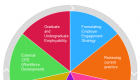 Employer engagement continuum model
 Learning chemistry through placements: building on good practice and identifying new opportunities
 Projects without borders: Understanding how employer-led UG projects differ across the STEM disciplines
 Strengthening, extending and embedding employer engagement
 The integration of understanding of offerings for engagement between universities and industry
 Peer Assisted Learning & STEM


© University of Bath 2011-12
HE STEM Programme, University of Bath, Bath, BA2 7AY, UK
Updated by HE STEM web team
Website by Float
