
Lead Institution: University of Bath
Collaborating with: University of Limerick, University College London, Coventry University, University of the West of England, Oxford Brookes University, Plymouth University, University of Exeter
Writing development books that focus on a STEM discipline or range of disciplines.
Biological and Medical Sciences
Divan, A. (2009). Communication Skills for the Biosciences: A Graduate Guide. Oxford: Oxford University Press.
This guide for postgraduates covers a wide range of writing and communication topics, from managing e-mails to writing research proposals, conference papers, peer-reviewed journal articles, audio-visual presentations, and theses. It provides detailed guidance, and reflective checklists, rather than practical exercises.
Johnson, S. and Scott, J. (2009). Study and Communication Skills for the Biosciences. Oxford: Oxford University Press.
This guide for undergraduates covers a wide range of writing and communication topics, from making notes and gathering information, to creating various kinds of technical communication, and even exam technique. It provides detailed guidance rather than practical exercises.
Knisely, K. (2009). A Student Handbook for Writing in Biology. 3rd ed. Sunderland, Massachusetts: Sinauer Associates.
Aimed primarily at undergraduates, coverage includes laboratory reports, peer-reviewed papers, slide presentations and posters. Unusual features include a chapter on scientific method and appendices on writing text, and creating graphs and slides, using Microsoft software.
Matthews, J.R. and Matthews, R.W. (2008). Successful scientific writing: A step-by-step guide for biological and medical sciences. 3rd ed. Cambridge: Cambridge University Press.
A comprehensive guide to scientific writing of value to both undergraduates and postgraduates. Guidance, coupled with short practical exercises, spans many kinds of scientific communication, from peer-reviewed papers to slide presentations and posters.
McMillan, V.E. (2006). Writing papers in the Biological Sciences. 4th ed. Boston, Massachusetts: Bedford/St Martin's.
Aimed at both undergraduates and postgraduates, this book does more than its title suggests, and includes some guidance on examination preparation, oral presentations, posters, research proposals, application letters, resumes and CVs.
Chemistry
Robinson, M.S., Stoller, F.L., Costanza-Robinson, M.S. and Jones, J.K. (2008). Write like a chemist: A guide and resource. Oxford: Oxford University Press.
A US text with numerous writing exercises focusing on journal articles, conference abstracts, scientific posters and research proposals. It emphasises the importance of effective reading informing effective writing. Likely to be of greatest interest to upper-level undergraduate students and postgraduates, but useful guidance for teaching and research staff.
Computer Science
Zobel, J. (2005). Writing for Computer Science. 2nd ed. London: Springer-Verlag.
The book's emphasis is on peer-reviewed papers and presentations, and although aimed primarily at postgraduates and practising scientists, there is plenty to interest undergraduates. The book's scope extends from grammar, punctuation and writing style, and employing mathematical and visual elements with text, to researching, editing and refereeing.
Engineering
van Emden, J. (2005). Writing for Engineers. 3rd ed. Basingstoke: Palgrave Macmillan.
Aimed at undergraduates, this text builds up the elements of writing, from vocabulary and punctuation, to sentences, paragraphs and document style and structure. Includes short exercises.
Young, T.M. (2005). Technical Writing A-Z: A Commonsense Guide to Engineering Reports and Theses. New York: ASME.
Wider coverage than its title suggests, this no-nonsense guide is suitable for undergraduates, postgraduates and engineering professionals, for dipping into and quickly accessing relevant information.

Dr Trevor Day
Project lead, University of Bath

Dr Íde O'Sullivan
University of Limerick

Dr Karen Bultitude
University College London

Dr Lisa Ganobcsik-Williams
Coventry University

Dr Margarida Sardo
University of the West of England
Dr Mary Deane
Oxford Brookes University

John Hilsdon
Plymouth University
Lawrence Cleary
University of Limerick

Rachel Canter
University of Exeter

 Extending the Use of Spectroscopy in a Suitcase
 Progressing from labour market intelligence to HE level provision that is well supported by employers
 Employability Skills of STEM Student Ambassadors
 Get STEM working: innovation with employer and student engagement
 Projects without borders: Understanding how employer-led UG projects differ across the STEM disciplines
 Transition & Induction Experiences of WP Students
 The Hydrographic Academy: Meeting the needs of the workforce and industry through innovative, flexible, online distance learning
 Student-led Employability Audit Toolkit
 Enhancing STEM Academics' Public Engagement Skills
 Strengthening, extending and embedding employer engagement
 Technology-enabled employer engagement in analytical chemistry
 Community of Practice for Outreach and WP Practitioners
 South West HE STEM Workforce Development & Employability Conference
 The challenges and opportunities of incorporating community-based learning into STEM subjects
 A partnership for engineering CPD, learning, training and knowledge exchange
 Visual Impairment & STEM
 Peer Assisted Learning & STEM
 Access Grid Nodes for remote training provision for work-based learners
 Easing the Transition from School Mathematics to University
 Effective Evaluation of Placement Learning Opportunities
 Adult returner journeys through HE to STEM careers
 The employer perspective on universities' promotion of opportunities to engage with the STEM UG curriculum
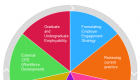 Employer engagement continuum model
 HiSPARC - Doing Real Particle Physics Research in Schools
 Developing a new CRM system for managing relationships with SMEs


© University of Bath 2011-12
HE STEM Programme, University of Bath, Bath, BA2 7AY, UK
Updated by HE STEM web team
Website by Float
