
Lead Institution: University of Bath
Collaborating with: University of Limerick, University College London, Coventry University, University of the West of England, Oxford Brookes University, Plymouth University, University of Exeter
Brake, M.L. and Weitkamp, E. eds (2010). Introducing Science Communication. Basingstoke: Palgrave Macmillan.
This edited compilation reviews the context for, and practice of, science communication in different media. It includes a useful chapter on writing, plus chapters on broadcasting, presenting to audiences, and science communication in museums and science activity centres.
Ebel, H.F., Bliefert, C. and Russey, W.E. (2004). The Art of Scientific Writing. Second Edition. Weinheim: Wiley-VCH.
Guide to scientific writing genres, with an emphasis on writing techniques, accurate expression, meeting accepted standards, and above all clarity. Especially suitable for postgraduates, and for teaching and research staff.
Gilpin, A. and Patchet-Golubev, P. (2000). A Guide to Writing in the Sciences. Toronto: Toronto University Press.
A guide to better scientific writing based on an undergraduate course, with contributions from both writing specialists and scientists.
Holtom, D. and Fisher, E. (1999). Enjoy Writing Your Scientific Thesis or Dissertation! London: Imperial College Press.
A short, highly accessible overview of the process of writing an undergraduate dissertation or postgraduate thesis. Useful, but becoming slightly dated.
Katz, M. J. (2006). From Research to Manuscript: A Guide to Scientific Writing. Dordrecht: Springer.
It treats writing as part of the research process and reveals how to compose the sections of a scientific paper, through drafts and rewrites to the final product. It recognises that different scientific disciplines have different practices and so gives examples of well-written papers from various subject areas. Most useful for advanced undergraduates, postgraduates and teaching and research staff.
Kirkman, J. (2005). Good Style: Writing for Science and Technology. Second Edition. Abingdon: Routledge.
Aimed at STEM students and professionals, it concerns how to write technical material in a coherent, accessible style. It includes detail about choices of vocabulary, phrasing and sentence structure for different contexts.
Montgomery, S.L. (2003). The Chicago Guide to Communicating Science. Chicago: University of Chicago Press.
Offers detailed, practical advice on crafting many forms of scientific communication, from research papers and conference talks to review articles, interviews with the media, e-mail messages, and more. The emphasis is on promoting models of good practice, and developing voice with clear expression, with examples from different disciplines. Most suitable for advanced undergraduates, postgraduates and teaching and research staff.

Dr Trevor Day
Project lead, University of Bath

Dr Íde O'Sullivan
University of Limerick

Dr Karen Bultitude
University College London

Dr Lisa Ganobcsik-Williams
Coventry University

Dr Margarida Sardo
University of the West of England
Dr Mary Deane
Oxford Brookes University

John Hilsdon
Plymouth University
Lawrence Cleary
University of Limerick

Rachel Canter
University of Exeter

 Progressing from labour market intelligence to HE level provision that is well supported by employers
 Get STEM working: innovation with employer and student engagement
 Developing a new CRM system for managing relationships with SMEs
 Projects without borders: Understanding how employer-led UG projects differ across the STEM disciplines
 Adult returner journeys through HE to STEM careers
 Technology-enabled employer engagement in analytical chemistry
 Enhancing Workplace Statistical Literacy
 Developing & Enhancing STEM Communicator Models
 Strengthening, extending and embedding employer engagement
 Visual Impairment & STEM
 Extending the Use of Spectroscopy in a Suitcase
 Student-led Employability Audit Toolkit
 Promoting employer engagement opportunities to employers
 Community of Practice for Outreach and WP Practitioners
 The Hydrographic Academy: Meeting the needs of the workforce and industry through innovative, flexible, online distance learning
 Employability Skills of STEM Student Ambassadors
 Learning chemistry through placements: building on good practice and identifying new opportunities
 Online Numeracy Resource & Nursing
 Becoming a STEM Enthusiast - Outreach & CPD Video Resources
 The employer perspective on universities' promotion of opportunities to engage with the STEM UG curriculum
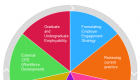 Employer engagement continuum model
 Better understanding drivers for employer engagement through an innovative approach to relationship management
 Development and implementation of a programme of employability skills for Science undergraduates
 Quantifying the benefits to collaborating companies of working with groups of students on UG projects
 Developing Writing in STEM Disciplines


© University of Bath 2011-12
HE STEM Programme, University of Bath, Bath, BA2 7AY, UK
Updated by HE STEM web team
Website by Float
