
Lead Institution: Bournemouth University
Collaborating with: STEMNET, University of Bath, University of the West of England
This seminar, held at Bournemouth University on 22nd May 2012, was targeted at those with an interest in improving and enhancing the student experience with particular focus on the first year experience. It followed on from a previous seminar focusing on transition and held at the University of Exeter in June 2011.
An agenda for the day can be downloaded below:
The following spoke at the seminar:
Below you can access presentations reports from the day:
Sally Alsford presentation notes
Helen Watts presentation notes
Challenges in being a PAL Leader: A Sociolinguistic Analysis
Following the seminar, a briefing paper was produced which summarised findings from project work thus far. The briefing paper can be downloaded below:
The seminar concluded with a fruitful panel discussion; questions raised included:
Q. What is the ideal group size for PAL sessions?
A. You need to be able to do small group work. Also you need to be able to build a rapport with the students. Less than 15 students per session is good.
Q. What are people most interested in knowing when contacting the Equality Challenge Unit?
A. Whether they are breaking the law!
Q. Does the issue about declaring disability, affect statistics ie. self-declarers are more proactive, so get more help?
An institution should proactively reflect on their course set up and contemplate imaginary scenarios, for example, having a visually impaired student on a course. This is so disabled students are already hypothetically accommodated and outreach or other material can reflect this. The idea being that students with disabilities may be deterred by institutions that do not proactively seek to accommodate them.
Other points of interest:
There also followed a discussion on how to manage a PAL group / session:
Q. Is there an issue about students wondering why they are getting “taught” by students instead of staff?
A. in a survey of 500 students, only one raised it.
Q. Do you expect PAL leaders to answer all student questions?
A. No PAL leaders are trained to redirect questions, rather than to answer them. It is a safe space for students to try answering questions themselves (as found by Helen Watts in her research). PAL leaders learn lots of questioning skills to establish what the problem actually is for the student.
Q. Do PAL leaders identify themselves as “students”?
A. Yes, they tend to “level” themselves rather than “distance” themselves.
Q. Do you have small group tutorials as well?
A. Some institutions do, some don’t. Some are reinstigating this. It is harder for modular degrees.
Q. Do problems with lectures get fed back to lecturers?
A. Yes. It can be a very useful way of getting direct feedback to lecturers so that they can address any problems in subsequent lectures.
Q. Does each PAL session have a pre-determined agenda?
A. Yes, students tend to suggest in advance usually.
Feedback from the day was very positive, as witnessed by the following delegate comments:
Thanks for a very interesting day. This was my first event about these subjects and so I found it very interesting and a great way to pick up the latest ideas and research in the area. Ed Foster's talk was probably the most relevant to my current practice, as I deal with students who are struggling with their academic work and therefore often in that mode of "doubt" about higher education.
I also found Sally Alsford's talk very interesting as it revealed a lot about the way students view events such as Induction week.
So, many thanks again. The discussions were interesting and informative and the whole day seemed seamlessly put together, in an excellent location.
As a result I've joined ALDinHE and hopefully will be attending other events .
I found the speakers’ talks very interesting. All the talks were very useful and relevant to the topic.
I found the discussion part very useful. There were many people there with the experience of working with PAL. I could take some advice regarding my fears of poor attendance of students’ participants during the running the scheme.
I got a very good advice on allocating the rooms for PAL group. Something really simple such as allocating a flat room instead of a big lecture theatre in which seats are not at the same level would make a lot of difference on working groups, which I didn’t notice before.
I find a blog or discussion board for people working in this area very useful.

Christine Keenan
Project lead, Bournemouth University

Penny Mitchell
Project coordinator, Bournemouth University

Heather Campbell
STEMNET

Iryna Withington
University of Bath
Lisa Benjamin
University of Bath

Makis Malliris
University of the West of England

 Get STEM working: innovation with employer and student engagement
 Student-led Employability Audit Toolkit
 Progressing from labour market intelligence to HE level provision that is well supported by employers
 The challenges and opportunities of incorporating community-based learning into STEM subjects
 Design a Fireworks Show! - using Context and Problem Based Learning
 Strengthening, extending and embedding employer engagement
 Developing a new CRM system for managing relationships with SMEs
 Adult returner journeys through HE to STEM careers
 Developing Writing in STEM Disciplines
 Development and implementation of a programme of employability skills for Science undergraduates
 Enhancing Workplace Statistical Literacy
 Developing & Enhancing STEM Communicator Models
 Employability Skills of STEM Student Ambassadors
 Projects without borders: Understanding how employer-led UG projects differ across the STEM disciplines
 The Hydrographic Academy: Meeting the needs of the workforce and industry through innovative, flexible, online distance learning
 Community of Practice for Outreach and WP Practitioners
 Technology-enabled employer engagement in analytical chemistry
 Peer Assisted Learning & STEM
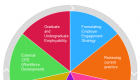 Employer engagement continuum model
 The employer perspective on universities' promotion of opportunities to engage with the STEM UG curriculum
 Transition & Induction Experiences of WP Students
 Visual Impairment & STEM
 Quantifying the benefits to collaborating companies of working with groups of students on UG projects
 Learning chemistry through placements: building on good practice and identifying new opportunities
 Extending the Use of Spectroscopy in a Suitcase


© University of Bath 2011-12
HE STEM Programme, University of Bath, Bath, BA2 7AY, UK
Updated by HE STEM web team
Website by Float
