
Lead Institution: University of Bath
Collaborating with: University of Limerick, University College London, Coventry University, University of the West of England, Oxford Brookes University, Plymouth University, University of Exeter
Today’s occasional newsletter is about:
• Science in the media
• Prizes for science writing
Science in the media
It seems there is more science than ever on British television and on BBC Radio; and much of it is of high quality. Science reporting in print and online journalism appears to be more variable.
When I attended Nobel Prize winner Sir Paul Nurse’s address ‘Science as revolution’ at the British Science Festival earlier this month, he was asked ‘How important is scientific communication with the public?’ My notes paraphrasing his answer are: ‘Very. But research scientists are encouraged to prioritise research over public communication. The best communicators should be rewarded for public engagement activities. Nurse considers science journalists and popular science writers are doing a pretty good job. It is other journalists and media commentators he is concerned about.’
On that theme, some of you will already be familiar with Ben Goldacre’s work – as a medical doctor, academic researcher and campaigning writer ( http://www.badscience.net/about-dr-ben-goldacre/ ). His column for the UK’s Guardian newspaper, Bad Science, focussed on the uses and misuses of science and statistics by journalists and others. His first book Bad Science is invaluable reading for any budding scientist. His follow up, Bad Pharma, was equally uncompromising whether targeting pharmaceutical companies or alternative medical practitioners. If you don’t have time to read these books, his Guardian article ‘Don’t dumb me down’ captures his incisive views and analysis in fewer than 2,000 words (http://www.theguardian.com/science/2005/sep/08/badscience.research ). This article won him Best Feature (and £2,000!) at the Science Writers Awards for 2005. More disapproving than Paul Nurse, he applauds some popular science journalism but is dismayed by the acres of misinformation touted in the UK’s media. Any of your students who wish to become science journalists, or simply better writers about science, ought to be reading Ben’s work.
Prizes for science writing
At the Writing Development in Higher Education Conference in July, Terri Edwards of Durham University asked me whether a list of science writing competitions existed. I’ve compiled one here. There are many science and engineering competitions in the United States; in the UK many of the smaller competitions come and go as sponsorship ebbs and flows.
It seems to me that writing competitions encourage students in at least three ways. First, by getting students to focus their energies to enter, so developing their writing capabilities often for non-academic audiences. Second, by making available the short-listed and prizewinning entries they offer students exemplars of fine writing. And third, they focus on the very best writing about science – to inspire students in their writing.
Here is a list of some of the regular UK competitions. I don’t pretend the list is complete, especially for engineering competitions. If you know of other competitions I’ll include them in the next newsletter and, of course, acknowledge you as the source:
The Association of British Science Writers (ABSW) organises a wide range of writing awards, with various sponsors. The award categories vary slightly from year to year. In 2014, the categories were:
Best feature (£500)
Best news item (£500)
Best scripted/edited television programme or online video (£500)
Royal Society Radio Prize (£500)
Best investigative journalism (£500)
The categories of greatest opportunity for students and young scientific researchers are probably:
NUJ Stephen White Award for best communication and reporting of science in a non-science context (£500)
Best newcomer award (£200)
Good Thinking student science blog award (£200)
Best science blog award (£500)
The Institute of Physics student science publication award (£300 winner/£200 runner up)
The Association of Engineering Doctorates (AEngD) awards £250 to two Engineering Research Writer of the Year prizewinners who write an 800-word article, suitable for publication in a magazine or broadsheet newspaper, and which encourages public discussion of research and innovation. The two categories are: reports of research with potential impact, and research with actual impact. Judges are looking for 'originality, bright ideas and a clear, distinctive writing style.' Shortlisted entrants are invited to attend an event and to deliver a short presentation based on their article.
The Institution of Civil Engineers in most years runs two writing-related competitions. The Papers Competition develops students’ writing, presentation and debating skills; 'Entries can be based on university projects, quarterly employment reports, or professional review reports.' The Communications Competition is held each spring. 'Competitors produce consultation strategies, leaflets and public consultation presentations for the engineering scenarios. The winning team goes on to compete in the semi-final and potentially the national final.'
The Max Perutz Science Writing Award is eligible to PhD students receiving funding from the Medical Research Council. It 'aims to encourage and recognise outstanding written communication ... The annual competition challenges entrants to write an 800-word article for the general public answering the question: "Why does my research matter?"' The winner receives a prize of £1,500 and all shortlisted entrants are invited to a science writing masterclass and awards ceremony in London.
For guidance on effective writing style and narrative, take a look at the recommendations of previous Max Perutz Award judges.
The Royal Society Prize for Science Books awards £25,000 to the winning author and £2,500 to the authors of the five shortlisted books. On the Royal Society’s webpages, streamed videos of interviews with short-listed authors bring their books to life.
Each year the Royal Society Young People’s Book Prize has groups of young people from across the UK choosing a winner from six books shortlisted by an adult judging panel. The Royal Society awards a prize to the best book that communicates science to under-14s. Prize money of £10,000 is awarded to the author(s) of the winning book with £1000 per book for shortlisted authors.
The Samuel Johnson Prize for Non-Fiction is a prestigious prize for non-fiction books published in the UK in English, with the competition co-sponsored by the BBC. Named after the English 18th-century iconoclast, Samuel Johnson, the competition’s motto 'All the best stories are true', encourages entrants from all fields of non-fiction. Science writers are commonly short-listed and occasionally win the £20,000-plus prize money.
The Wellcome Trust Science Writing Prize is open to those who are non-published in the sense that they are not journalists or writers who have been previously paid for publication. The two categories are:
1. professional scientists of postgraduate level and above;
2. anyone else with a non-professional interest in science (including undergraduate science students).
The judging panel is looking for 'short articles that address any area of science and which would be suitable for publication in the Guardian or the Observer, in print and online. You must demonstrate that you have thought about and understood your audience and that you can bring a scientific idea to life … originality, bright ideas and a distinctive writing style. Your 800-word article should show a passion for science and the potential to encourage the general public to consider, question and debate key issues in science and society.'
The prize winner in each category receives £1,000. Do encourage eligible students to enter.
The Wellcome Book Prize 'celebrates the very best books with a medical theme - both fiction and nonfiction - published in the UK during the Prize year; books that challenge our curiosity, fire our imagination, inspire debate and help us to think differently about the world around us.'
Chair of judges for 2015 is Bill Bryson. The Wellcome Book Prize is worth £30,000. Previous winners include: Andrew Solomon for 'Far From the Tree: Parents, children and the search for identity' in 2014; Thomas Wright for 'Circulation: William Harvey's revolutionary idea' in 2012; Alice LaPlante for 'Turn of Mind' in 2011; and Andrea Gillies for 'Keeper: Living with Nancy - A journey into Alzheimer's' in 2009.
The January/February 2015 newsletter will consider new narratives in scientific journal articles. If you have thoughts about this or any other items, do let me know, so that we can include your contributions.
With best wishes, Trevor
Dr Trevor Day
Reading & Writing for Results (http://www.reading-writing-results.com) and
Programme Leader, Royal Literary Fund Consultant Fellows’ Programme (http://rlfconsultants.com)
trevorday@ndirect.co.uk

Dr Trevor Day
Project lead, University of Bath

Dr Íde O'Sullivan
University of Limerick

Dr Karen Bultitude
University College London

Dr Lisa Ganobcsik-Williams
Coventry University

Dr Margarida Sardo
University of the West of England
Dr Mary Deane
Oxford Brookes University

John Hilsdon
Plymouth University
Lawrence Cleary
University of Limerick

Rachel Canter
University of Exeter

 Transition & Induction Experiences of WP Students
 Get STEM working: innovation with employer and student engagement
 Community of Practice for Outreach and WP Practitioners
 Peer Assisted Learning & STEM
 Strengthening, extending and embedding employer engagement
 Progressing from labour market intelligence to HE level provision that is well supported by employers
 Student-led Employability Audit Toolkit
 Developing Writing in STEM Disciplines
 Development and implementation of a programme of employability skills for Science undergraduates
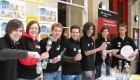 Developing & Enhancing STEM Communicator Models
 Projects without borders: Understanding how employer-led UG projects differ across the STEM disciplines
 Adult returner journeys through HE to STEM careers
 The integration of understanding of offerings for engagement between universities and industry
 Employability Skills of STEM Student Ambassadors
 Design a Fireworks Show! - using Context and Problem Based Learning
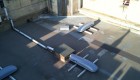 HiSPARC - Doing Real Particle Physics Research in Schools
 The Hydrographic Academy: Meeting the needs of the workforce and industry through innovative, flexible, online distance learning
 Online Numeracy Resource & Nursing
 Developing a new CRM system for managing relationships with SMEs
 Learning chemistry through placements: building on good practice and identifying new opportunities
 Effective Evaluation of STEM Outreach
 The employer perspective on universities' promotion of opportunities to engage with the STEM UG curriculum
 Enhancing Workplace Statistical Literacy
 The challenges and opportunities of incorporating community-based learning into STEM subjects
 Becoming a STEM Enthusiast - Outreach & CPD Video Resources


© University of Bath 2011-12
HE STEM Programme, University of Bath, Bath, BA2 7AY, UK
Updated by HE STEM web team
Website by Float
