
Lead Institution: University of Bath
Collaborating with: University of Limerick, University College London, Coventry University, University of the West of England, Oxford Brookes University, Plymouth University, University of Exeter
Greetings all
This occasional newsletter is more an observation and a request rather than being information-rich as previous newsletters.
As I travel around the country running ‘writing for publication’ sessions with STEM doctoral students, I'm discovering:
1) People are talking about the IMRAD structures of STEM papers not doing justice to the thinking processes behind the research. Following on from that, narrative accounts of how research actually unfolds and the developmental thinking behind the work are comparatively rare in papers in peer-reviewed STEM journals.
2) Those working on inter-disciplinary projects sometimes find problems getting suitable journals to publish their work (and the journals themselves find it difficult getting the appropriate mix of reviewers).
Is this your experience? Do you know of journal papers that are happy for contributors to adopt a more narrative approach to reporting research, breaking away from the IMRAD format and disclosing more of the actual thinking behind their work.
If you could forward your thoughts and experiences to me I will collate them, giving each person due credit, and will feedback the findings in the next newsletter. I look forward to hearing from you.
Some of the thoughts above were prompted by reading Peter Samuels’ paper ‘Techniques for Capturing Critical Thinking in the Creation and Composition of Advanced Mathematical Knowledge’ in the journal Double Helix: A Journal of Critical Thinking and Writing
http://qudoublehelixjournal.org/index.php/dh/issue/current/showToc
Having spoken to Peter Samuels since, I discovered that he and Magnus Gustafson had given a presentation in 2009 on Realism and Anti-Realism in Scientific Writing.
Incidentally, Peter would be interested in hearing from anyone who is involved in capturing mathematical thinking processes (the narrative behind mathematical creativity) and from colleagues who are interested in developing a corpus of material about mathematical process.
You can contact Peter at Peter.Samuels@bcu.ac.uk
Readers of this newsletter may also be interested in submitting an article, report or letter to the forthcoming Double Helix Volume ‘Thinking and Writing Beyond Two Cultures: STEM, WAC/WID, and the Changing Academy’, referring to C.P. Snow's (1959) Rede Lecture, ‘The Two Cultures and the Scientific Revolution’, concerning the two cultures – scientists and literary elites.
The deadline for submission is March 28th 2015. Double Helix is at
http://qudoublehelixjournal.org
Do please get back to me with your thoughts and experiences about narratives in science papers and difficulties in getting interdisciplinary papers published.
With thanks and best wishes, Trevor
Dr Trevor Day FHEA
Leader of the Royal Literary Fund Consultant Fellows' Programme
http://rlfconsultants.com/consultants/trevor-day/

Dr Trevor Day
Project lead, University of Bath

Dr Íde O'Sullivan
University of Limerick

Dr Karen Bultitude
University College London

Dr Lisa Ganobcsik-Williams
Coventry University

Dr Margarida Sardo
University of the West of England
Dr Mary Deane
Oxford Brookes University

John Hilsdon
Plymouth University
Lawrence Cleary
University of Limerick

Rachel Canter
University of Exeter

 Community of Practice for Outreach and WP Practitioners
 Progressing from labour market intelligence to HE level provision that is well supported by employers
 Adult returner journeys through HE to STEM careers
 Becoming a STEM Enthusiast - Outreach & CPD Video Resources
 Get STEM working: innovation with employer and student engagement
 Online Numeracy Resource & Nursing
 The challenges and opportunities of incorporating community-based learning into STEM subjects
 Quantifying the benefits to collaborating companies of working with groups of students on UG projects
 Projects without borders: Understanding how employer-led UG projects differ across the STEM disciplines
 Strengthening, extending and embedding employer engagement
 Extending the Use of Spectroscopy in a Suitcase
 Visual Impairment & STEM
 Peer Assisted Learning & STEM
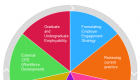 Employer engagement continuum model
 The Hydrographic Academy: Meeting the needs of the workforce and industry through innovative, flexible, online distance learning
 Student-led Employability Audit Toolkit
 Design a Fireworks Show! - using Context and Problem Based Learning
 Developing & Enhancing STEM Communicator Models
 Effective Evaluation of Placement Learning Opportunities
 The integration of understanding of offerings for engagement between universities and industry
 HiSPARC - Doing Real Particle Physics Research in Schools
 Employability Skills of STEM Student Ambassadors
 Developing Writing in STEM Disciplines
 Technology-enabled employer engagement in analytical chemistry
 Developing a new CRM system for managing relationships with SMEs


© University of Bath 2011-12
HE STEM Programme, University of Bath, Bath, BA2 7AY, UK
Updated by HE STEM web team
Website by Float
